Facility and Risk Management Tips presented by www.solidrockfacilitymanagers.com
Seasonal pest control management practices.
Seasonal pest control is an ongoing, proactive process of taking specific actions to prevent pest infestations based on the time of year, with key practices including eliminating standing water, sealing entry points, maintaining a clean and tidy environment, proper waste management, and using barriers.
At Solid Rock, based on over 30 years of experience across continents completing over 25,000 pest control treatments we have determined the best time to get pest control for a standard pest control treatment service is between August – December. These months are when temps and humidity start to rise and this will get pests out and about.
Effective seasonal pest control follows the life cycles and behaviors of pests across the year, utilizing an Integrated Pest Management (IPM) approach that prioritizes sanitation, exclusion, and cultural practices over chemical use.
Spring: Inspection and Prevention
• Termites: Swarming season peaks as colonies search for new wood structures. Inspect foundations for mud tubes, discarded wings, and soft or damaged wood; treat surrounding soil with termiticides if needed.
• Ants and Stinging Insects: Warmer weather triggers outdoor foraging. Seal cracks and entry points around doors, windows, and utility lines. Apply perimeter bait stations or barrier treatments.
• Yard Maintenance: Trim overhanging tree branches, clear away winter debris, and remove early standing water to cut off breeding sites.
Summer: High-Activity and Vector Management
• Mosquitoes: Warm temperatures and rainfall create rapid breeding conditions in stagnant water. Empty, scrub, or treat containers, gutters, and plant saucers holding standing water. Use insect repellents and mosquito nets, or apply targeted barrier treatments.
• Cockroaches and Flies: Thouroughly deep-clean kitchens, bathrooms, and waste disposal areas to strip away food and moisture sources. Keep grass short and maintain clean perimeters around dumpsters or delivery bays.
• Ticks: High grass and brush increase tick exposure for people and pets. Keep lawns mowed short and apply targeted perimeter treatments if living in high-risk zones.
Fall: Exclusion and Indoor Migration
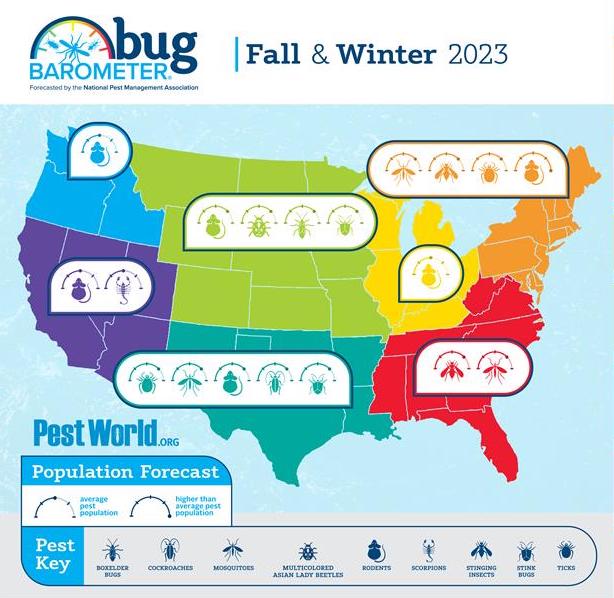
• Rodents (Rats and Mice): Cooling weather drives rodents and spiders to seek indoor warmth. Seal all gaps, vents, and foundation cracks. Move firewood stacks and dense vegetation away from the exterior walls.
• Stink Bugs and Boxelder Bugs: These pests look for cracks to overwinter inside walls. Install or repair window and door screens and seal utility penetrations.
• Indoor Preventive Treatments: Apply preventive perimeter treatments before pests move inside, as halting them outside is much more effective than treating active indoor infestations.
Winter: Monitoring and Containment
• Interior Surveillance: Focus on indoor monitoring using traps, glue boards, and routine visual checks in basements, attics, and utility rooms.
• Sanitation and Log Keeping: Keep food stored in airtight containers and track any pest sightings to prepare early defense plans before spring emergence begins.
• Professional Audits: Schedule routine quarterly audits or maintenance with a licensed pest control provider to ensure compliance and long-term protection
.
When to Call a Professional
For comprehensive protection or ongoing management, a professional pest control service can provide customized plans for year-round defense against invaders.
Don’t wait for a full-blown infestation; proactive and adaptive strategies are key to controlling pests year-round.
At Solid Rock, we have developed effective methodologies and best practice to eradicate rodents from your homes and offices.
At Solid Rock , we’ve helped customers protect their property and families from invasive pests. Our attention to detail and knowledge produce great results every time.
At Solid, we are behind your business success www.solidrockfacilitymanagers.com